
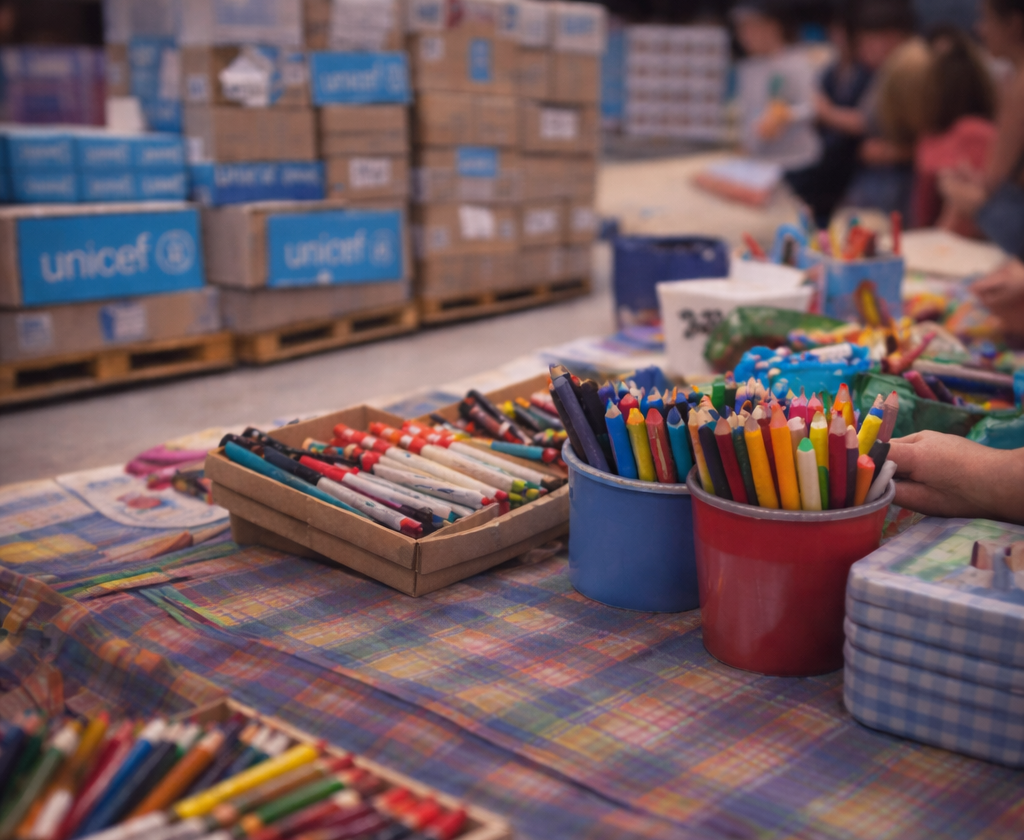
PALESTINE — For the first time in more than two years, UNICEF has delivered children’s art and recreational supplies into the heavily besieged Gaza Strip, aiming to support the wellbeing, learning and psychological resilience of young people living amid prolonged conflict and hardship.
The United Nations children’s agency announced that on 15 January 2026, it was able to bring in 5,168 recreational kits — including notebooks, crayons, pencils and other creative materials — that will benefit more than 375,000 children, including approximately 1,000 children with disabilities. UNICEF officials described these materials as essential tools not just for play, but for cognitive development, emotional expression and structured activity in an environment where schooling and normal routines have been largely disrupted by war.
Context: Aid Access After Prolonged Restriction
The delivery marks a rare breakthrough in humanitarian access to Gaza after years of restrictions that have limited the flow of educational and relief supplies. Since the outbreak of full-scale conflict in October 2023, international aid organisations have repeatedly reported difficulties getting vital equipment into Gaza due to tightened control over border crossings. Israeli authorities say they maintain oversight of all goods entering the territory to address security concerns, even as humanitarian agencies urge expanded access.
UNICEF’s announcement comes against the backdrop of the phase two rollout of a US-brokered peace plan, introduced in mid-January 2026, aimed at advancing reconstruction and easing humanitarian constraints under a fragile ceasefire that took effect in October 2025.
Despite this progress, education and early childhood learning resources — including textbooks and classroom materials — remain largely blocked, prompting continued appeals from UNICEF for broader authorisation of supplies that can support developmental and emotional needs of children in Gaza.
Children in Gaza: Humanitarian Imperatives
Humanitarian advocates say that opportunities for play and creative expression are not luxuries but central to children’s mental health, particularly for those who have endured repeated displacement, loss and violence over more than two years of conflict. Gaza’s education system has been severely disrupted, and many families report that children have lacked structured activities, safe spaces and normal routines for extended periods.
Nutrition, medical care and shelter also remain critical concerns, with recent UNICEF reporting highlighting high rates of acute malnutrition among young children due to food shortages and the broader humanitarian collapse inside the territory.
Islamic Ethical Context on Care for Children
Islamic teachings place a high moral value on the wellbeing and dignity of children, recognising their special needs for protection, learning and holistic development. In The Quran, believers are reminded of the importance of nurturing youth with compassion and justice.
Teachings in Hadith Books emphasise the Prophet Muhammad’s ﷺ care for children, underscoring that mercy, education and emotional support are virtues that strengthen community resilience.
Stories from The Seerah illustrate how early Muslim societies prioritised care and support for the young, ensuring their physical and spiritual wellbeing even amid societal challenges.
These principles inform why humanitarian support — from basic nutrition to psychosocial aid — is seen by many Muslim observers not only as charitable service but as an ethical responsibility toward the most vulnerable.


Leave a Reply