

UNITED STATES — Zohran Mamdani invoked the Hijrah and the Prophet Muhammad (Peace be upon Him) while defending immigrant protections, as his administration signed Executive Order 13 to tighten rules around cooperation with federal immigration enforcement and access to city property, according to city documents and local reporting. (Source – NYC Mayor’s Office, Feb. 6, 2026; NY1, Feb. 7, 2026)
At the city’s annual Interfaith Breakfast at the New York Public Library, Mamdani described Islam as “a religion built upon a narrative of migration,” and linked the experience of displacement and refuge to the moral questions raised by immigration policy in the United States, according to a city press release and other coverage. (Source – NYC Mayor’s Office, Feb. 6, 2026; Religion News Service, Feb. 6, 2026)
Executive Order 13 states that city agencies must protect information collected for city purposes and generally may not share it with federal immigration authorities unless legally required; it also says federal authorities may not enter city property without a judicial warrant, with city spaces listed in reporting including schools, shelters, hospitals, and parking facilities. (Source – NYC Mayor’s Office, Feb. 6, 2026; CBS News New York, Feb. 7, 2026; NY1, Feb. 7, 2026)
Some international coverage described Mamdani as a state lawmaker, but New York City’s official releases identify him as mayor and include his signature on the executive order as “Mayor.” (Source – Roya News, Feb. 7, 2026; NYC Mayor’s Office, Feb. 6, 2026)
Executive Order 13 and the growing federal-local clash on immigration
City Hall and supportive immigrant-rights groups cast the order as a public-safety measure meant to ensure residents can report crimes and use services without fear that personal data will be turned over for civil immigration enforcement. (Source – NYC Mayor’s Office, Feb. 6, 2026; New York Immigration Coalition, Feb. 2026; ABC7 New York, Feb. 2026)
The order drew pushback from the U.S. Department of Homeland Security, which accused the city of risking public safety by limiting cooperation with immigration detainers, according to local reporting summarizing a DHS press release. (Source – Brooklyn Eagle, Feb. 10, 2026)
The dispute sits within a broader legal and political fight over “sanctuary” policies, with the Reuters previously reporting on federal litigation targeting New York City’s limits on cooperation with federal immigration enforcement. (Source – Reuters, July 24, 2025)
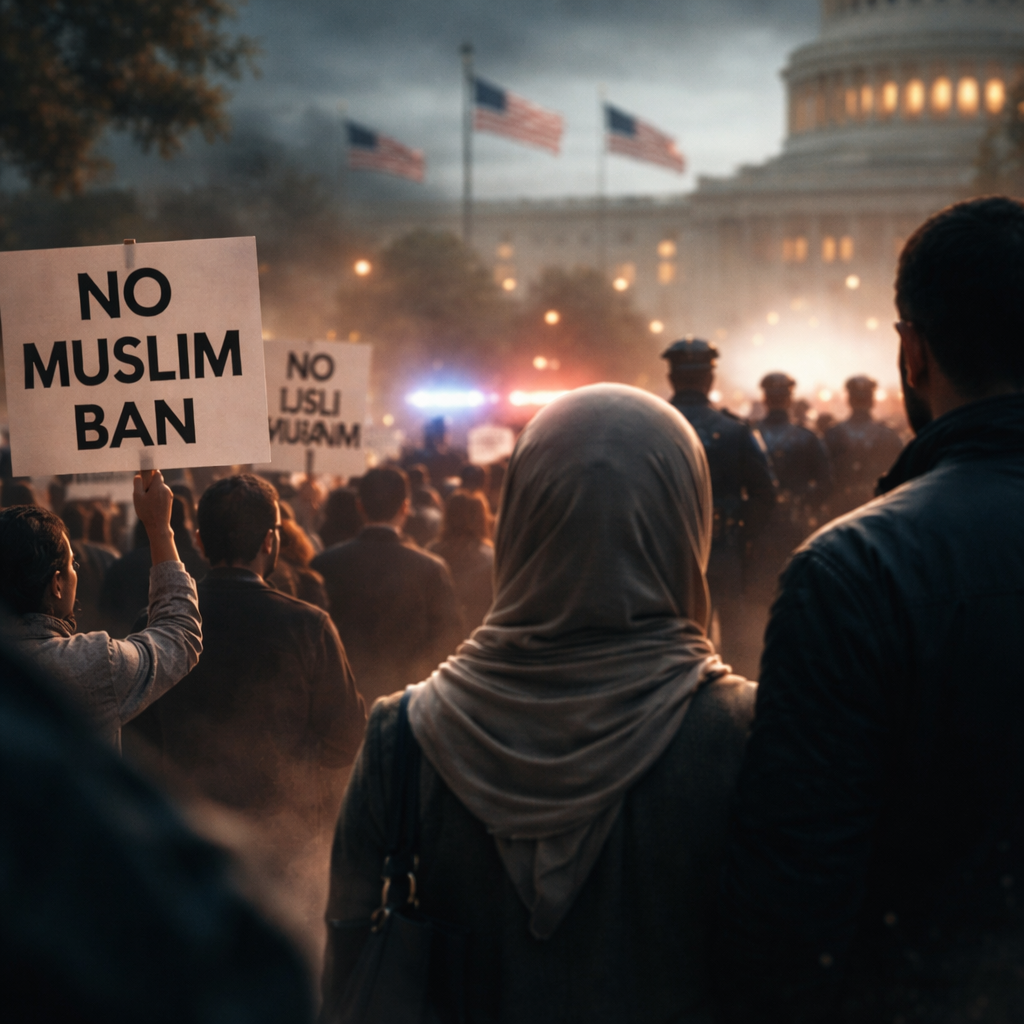
For many Muslim and immigrant New Yorkers, the debate is not abstract. Community advocates say heightened enforcement rhetoric and uncertainty around access to services can fuel fear, underreporting of crime, and reluctance to seek help — dynamics city officials cited in describing the rationale for Executive Order 13. (Source – NYC Mayor’s Office, Feb. 6, 2026; New York Immigration Coalition, Feb. 2026)
Islamic and Ethical Context
Mamdani’s framing of migration through the Hijrah and the Prophet Muhammad (Peace be upon Him) reflects how many Muslims understand displacement and refuge not only as political realities but as human experiences that demand dignity and fairness. In Muslim communities, discussions about immigration often return to the idea that protection should not depend on someone’s status, wealth, or power — a principle reinforced in the ethical arc Muslims draw from The Seerah.
At the same time, Muslim leaders and advocates often emphasize that civic debates should remain grounded in universal rights and equal protection under the law, while still allowing faith communities to explain why they care. In that sense, references to The Quran can function as moral vocabulary for justice and the safeguarding of the vulnerable, without requiring others to share the belief.
For Muslims engaging public life in plural societies, Hadith Books are frequently cited for the broader ethic of standing against harm and supporting those facing hardship — an ethic that many Muslim organizations translate into practical work like legal aid, community safety partnerships, and “know your rights” education.

Leave a Reply