
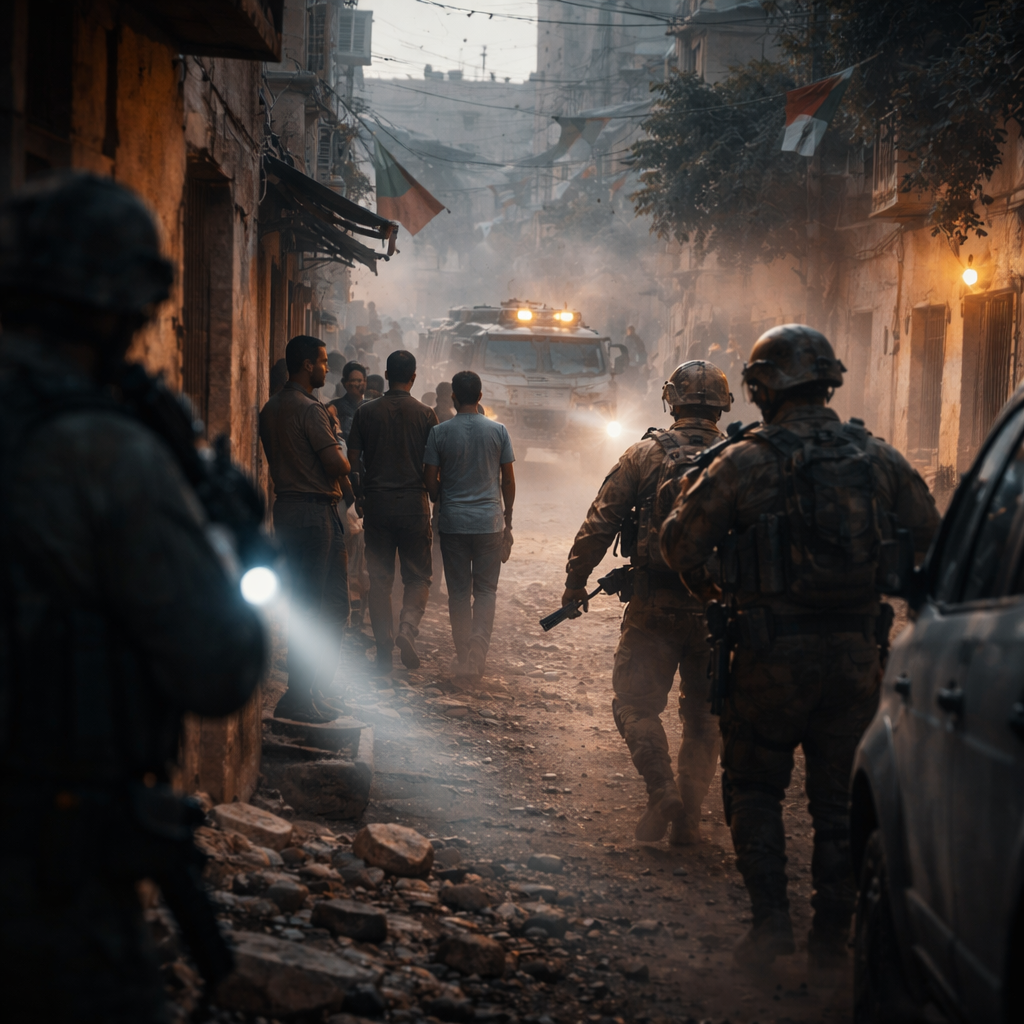
PALESTINE — Israeli forces carried out overnight raids across the occupied West Bank on February 4, with Palestinian officials and local media reporting arrests in areas including Nablus, Jenin, Tulkarm, Bethlehem, Hebron, Ramallah and Tubas, alongside a detention linked to staff at the Al-Aqsa Mosque compound in occupied Jerusalem. (Source – IMEMC News, Feb. 4, 2026; WAFA, Feb. 4, 2026)
In Nablus, residents and local outlets reported soldiers entering several neighbourhoods and the Old City, with multiple home searches and arrests in the city and nearby villages west and northwest of Nablus. (Source – IMEMC News, Feb. 4, 2026)
Similar overnight incursions were reported in Jenin and Tulkarm districts, with additional arrests described in communities north of Tulkarem, as well as in Bethlehem-area locations including Aida refugee camp. (Source – IMEMC News, Feb. 4, 2026)
In Hebron district, Palestinian sources reported arrests in several communities, allegations of home damage during searches, and the delivery of a punitive demolition order linked to a detainee accused by Israeli authorities of involvement in a shooting incident near Bethlehem. (Source – IMEMC News, Feb. 4, 2026)
Palestinian reporting also described arrests in Ramallah-area locations including Al-Am’ari refugee camp, as well as an arrest in Tubas and later damage at a school site in the northeastern West Bank. (Source – IMEMC News, Feb. 4, 2026; Anadolu Agency, Feb. 4, 2026)
Al-Aqsa Detentions and School Disruption Add to Ramadan Tensions
In occupied Jerusalem, Palestinian officials said an Al-Aqsa Mosque guard, Abdul Rahman al-Sharif, was detained after Israeli forces raided his home, and that authorities expanded summonses and bans affecting mosque-linked figures and Jerusalem residents. (Source – WAFA, Feb. 4, 2026)
The developments come as Palestinian institutions warn of tighter policing and movement restrictions around the Old City and the mosque compound ahead of Ramadan, raising concerns about access for worshippers and pressures on Waqf-linked staff. (Source – WAFA, Feb. 4, 2026)
Separately, the Palestinian Education Ministry said Israeli forces raided Al-Tahaddi School in Khirbet Ibziq (Tubas area), seizing equipment and damaging water, electricity and internet networks, while blocking the road leading to the campus. (Source – Anadolu Agency, Feb. 4, 2026)
Education officials and local residents have previously described the Ibziq area as facing repeated disruptions connected to military activity and settler presence, with students and teachers often struggling to reach school safely and consistently. (Source – Anadolu Agency, Feb. 4, 2026)
Wider Escalation and International Warnings
Israel has described many West Bank operations as aimed at dismantling militant infrastructure and addressing security threats, amid a broader campaign in the northern West Bank that has included raids, roadblocks and extended troop deployments. (Source – Reuters, Nov. 26, 2025)
The UN human rights office warned on February 6 that new Israeli operations and settlement-related moves in the occupied West Bank risk accelerating forced displacement and undermining Palestinians’ right to self-determination, while calling for accountability for unlawful killings and other violations. (Source – OHCHR, Feb. 6, 2026)
UN humanitarian reporting has also documented how raids and movement restrictions can rapidly disrupt daily life, including access to healthcare and schooling, alongside rising injuries during operations in densely populated areas such as parts of Nablus and Hebron. (Source – OCHA oPt, Jan. 2026)
Against that backdrop, Palestinian families and community leaders say the immediate impact of night raids is felt in the most ordinary places — homes, mosques, schools, and workplaces — where fear and uncertainty can linger long after soldiers leave. (Source – Anadolu Agency, Feb. 4, 2026; OHCHR, Feb. 6, 2026)
Islamic and Ethical Context
Islamic ethics emphasise justice, the protection of human dignity, and the safeguarding of places of worship — principles reflected in The Quran’s repeated calls to uphold justice and oppose wrongdoing without dehumanising others. In that lens, restrictions affecting Al-Aqsa worship and pressure on civilian life in occupied communities raise urgent questions about proportionality, accountability, and the protection of non-combatants.
Hadith Books also underscore due process, the prohibition of ظلم (oppression), and the importance of protecting civilians from harm. The Seerah records that Prophet Muhammad (Peace be upon Him) established norms of restraint and community protection even amid conflict — guidance that many Muslims today invoke when assessing whether power is being exercised responsibly and whether vulnerable people are being safeguarded.
Leave a Reply