
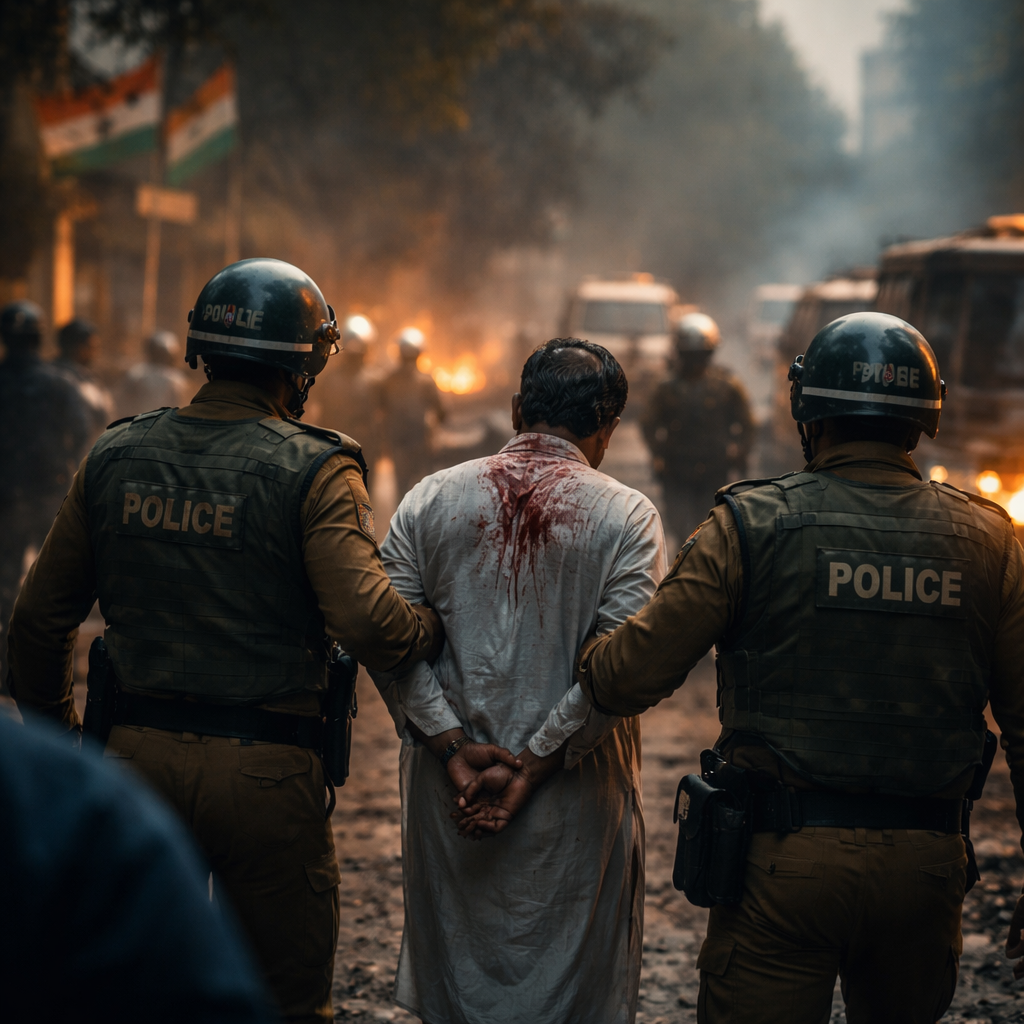
INDIA — A court in India has summoned two Delhi Police personnel to appear in connection with the death of a Muslim man, Faizan, whose assault in police custody during the February 2020 violence in northeast Delhi was captured in a widely circulated video. (Source – The Indian Express, February 6, 2026; Hindustan Times, February 6, 2026)
The summons follow a charge sheet filed by India’s Central Bureau of Investigation, which took over the probe after the Delhi High Court transferred the case from Delhi Police in 2024, citing concerns about the pace and quality of the earlier investigation. (Source – Hindustan Times, February 6, 2026; The Quint, February 6, 2026)
The court has called Head Constable Ravinder Kumar and Constable Pawan Yadav to appear on February 24, 2026, according to multiple reports. The CBI has accused the officers of offenses including culpable homicide not amounting to murder and causing hurt, while not retaining a murder charge that had been included earlier. (Source – The Times of India, February 6, 2026; The Print, February 6, 2026; The Quint, February 6, 2026)
The case is among the most closely watched accountability proceedings linked to the 2020 violence, which left at least 53 people dead and displaced families across neighborhoods where many residents are Muslim. Rights groups and survivor advocates have repeatedly alleged failures to protect victims and bias in how cases were investigated and prosecuted. (Source – Human Rights Watch, February 21, 2022; Amnesty International, August 27, 2020; Al Jazeera, July 17, 2020)
Video evidence and family’s petition drive renewed scrutiny
The allegations stem from footage filmed during the 2020 unrest showing several injured men lying on a road while police officers beat them and forced them to sing the national anthem, reports said. Faizan later died after being taken to hospital, and his family has long argued that the initial investigation did not properly examine the actions of police personnel captured on camera. (Source – LiveLaw, February 6, 2026; The Times of India, February 6, 2026; Hindustan Times, February 6, 2026)
Indian media reported that Faizan’s mother, Kismatun, approached the Delhi High Court seeking an independent probe, alleging illegal detention, assault, and denial of timely medical care. The High Court’s 2024 order moved the investigation to the CBI; the agency later filed its charge sheet, leading to the court summons now issued. (Source – Hindustan Times, February 6, 2026; Bar and Bench, February 6, 2026; The Times of India, February 6, 2026)
The development arrives as courts continue to assess numerous cases connected to the 2020 violence, with some judges issuing sharp criticism of investigative work in specific matters. In a separate case reported in recent days, a Delhi court acquitted six men accused of arson near a mosque, describing the police charge sheet as “fabricated” and pointing to manipulated evidence, according to reports. (Source – The Indian Express, February 1, 2026; The Times of India, February 3, 2026)
Islamic and Ethical Context
For many Muslim families affected by the 2020 violence, the central demand has been equal protection under the law and credible accountability when state power is alleged to have been used unlawfully. The Quran frames justice as a moral obligation and warns against allowing anger or prejudice to derail fairness, a principle that resonates strongly when communities feel their suffering is dismissed or unevenly investigated.
In Islamic tradition, Hadith Books repeatedly emphasize that wrongdoing is not excused by rank or authority, and that harm must be answered with accountability and repair, not denial. That ethical lens does not pre-judge legal outcomes, but it does underscore why transparent investigations and fair trials matter for public trust—especially when victims belong to a vulnerable minority.
The Seerah records that Prophet Muhammad (Peace be upon Him) built communal life on security, dignity, and the protection of the vulnerable, insisting on truthful testimony and due process even in tense, polarized moments. In that spirit, Muslim civil society voices in India have argued that accountability mechanisms must work visibly and consistently—so that justice is not only done, but seen to be done, for every citizen regardless of faith.


Leave a Reply