
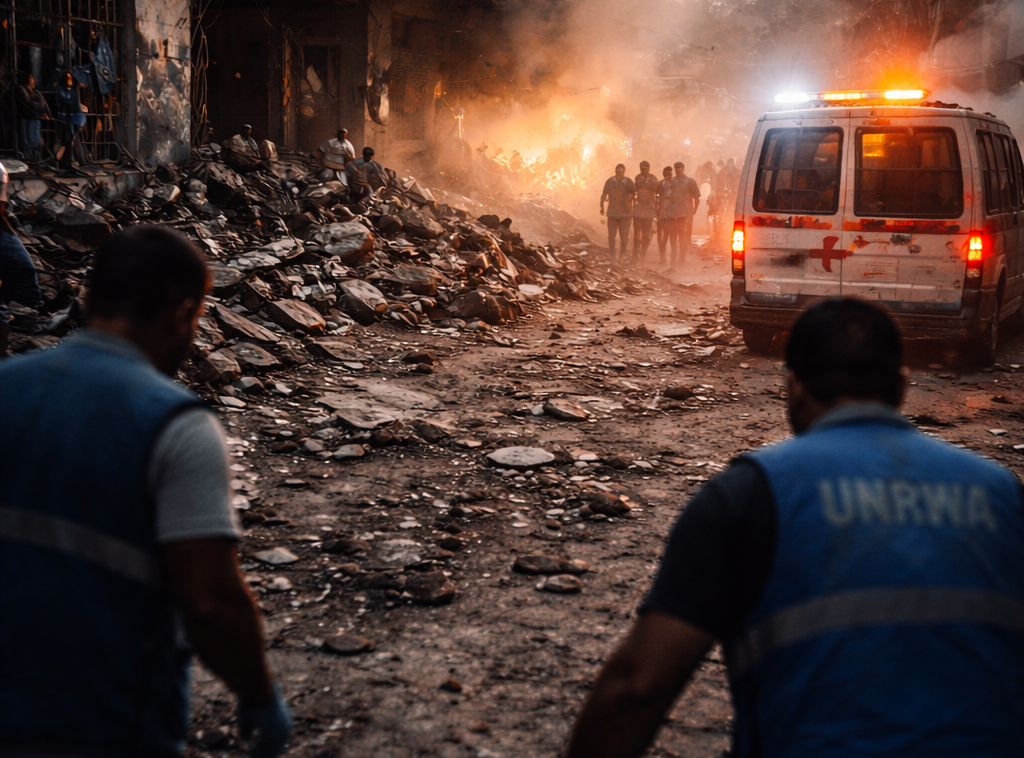
PALESTINE — Several Palestinians were injured on Sunday evening when an Israeli drone struck a United Nations Relief and Works Agency (UNRWA) medical clinic in the Jabalia refugee camp in the northern Gaza Strip, Palestinian medical sources reported. The facility was treating patients at the time of the strike, prompting urgent hospital admissions. WAFA, the Palestinian state-run news agency, said the incident occurred amid ongoing violations of a ceasefire that came into effect in October 2025.
Local health officials reported multiple injuries, though independent verification of the exact figures was not available at the time of publication. UNRWA confirmed damage to health infrastructure but has not released a detailed casualty assessment publicly. Palestinians in the camp expressed fear and frustration as the latest violence compounds Gaza’s fragile humanitarian situation, including shortages of medical supplies and overwhelmed hospitals.
The Israeli military did not immediately respond to requests for comment on the reported strike, and independent sources have not yet corroborated the targeting of the clinic. Prior incidents involving strikes on civilian spaces in Gaza have drawn international concern about compliance with international humanitarian law.
Rising Toll Since Ceasefire
The reported clinic strike comes amid what Palestinian officials describe as recurring breaches of the ceasefire agreement agreed in October 2025, which has seen periodic flare-ups and violations. According to WAFA figures, since the truce, hundreds of Palestinians have been killed and many more wounded in incidents across Gaza and the West Bank.
Humanitarian groups have repeatedly warned that Gaza remains one of the world’s most dangerous places for civilians and aid workers, with infrastructure damage exacerbating health, water, and sanitation crises. Efforts to investigate alleged violations of international humanitarian law face persistent access and security challenges. International actors, including the United Nations, have called for restraint and accountability from all parties to the conflict.
Islamic and Ethical Context
Under Islamic teachings, the protection of non-combatants and sacred spaces — including places of healing — is a foundational ethical principle. The Seerah of the Prophet Muhammad (peace be upon him) emphasises safeguarding civilians and those unable to defend themselves during conflict. Similarly, The Quran stresses the sanctity of life, stating that killing an innocent is akin to killing all humanity, and saving a life is as if saving all humanity. These ethical frameworks resonate with broader international humanitarian norms that call for the protection of medical personnel and patients during armed conflict.
Leave a Reply