
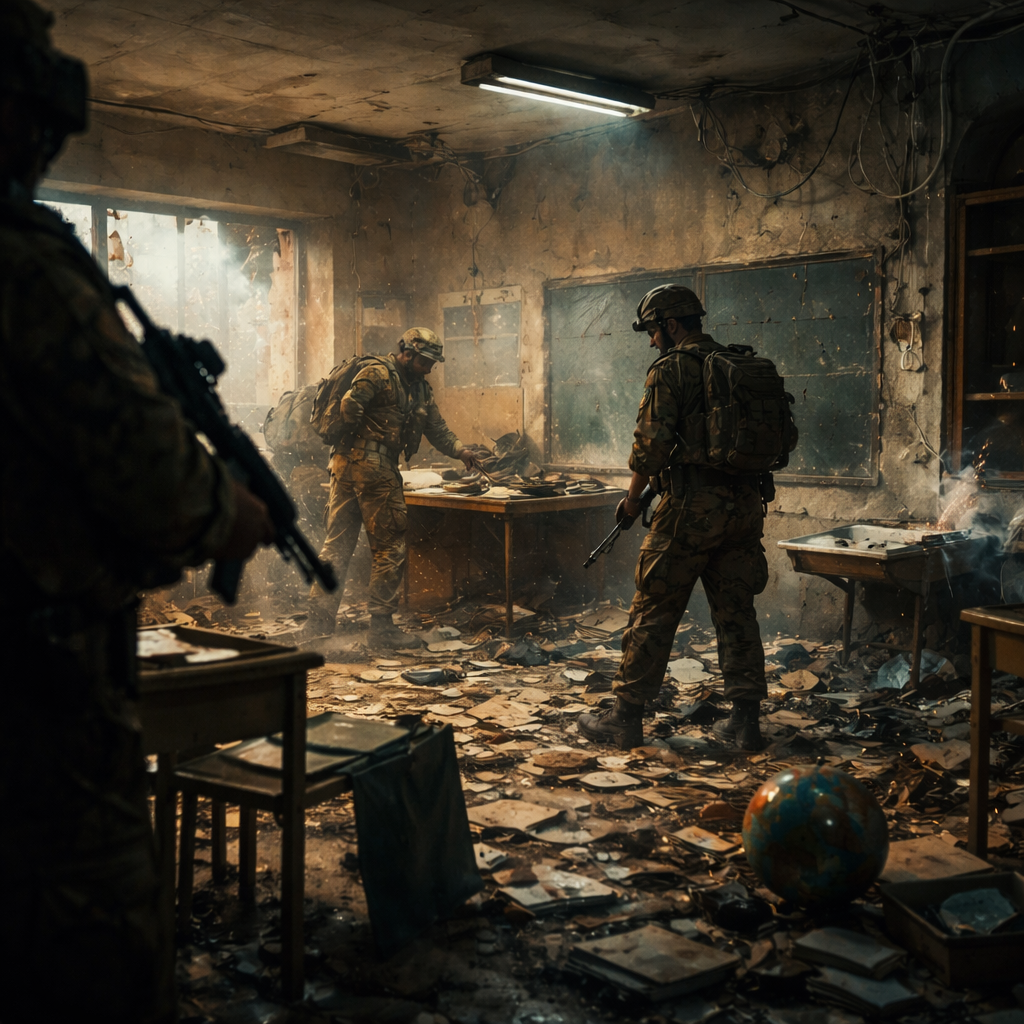
PALESTINE — Palestinian officials say Israeli forces raided the Al-Tahadi School in the Ibziq area of the northern Jordan Valley in the occupied West Bank overnight, vandalising classrooms, confiscating educational supplies and damaging basic infrastructure needed for students to attend classes safely. (Source – WAFA, February 4, 2026; Anadolu Agency, February 4, 2026)
According to WAFA, Azmi Balawneh, the director of education in Tubas, said troops entered the school grounds in Harb Ibziq, northeast of Tubas, damaged property and seized materials, while also destroying the site’s water, electricity and internet networks. (Source – WAFA, February 4, 2026)
Anadolu Agency, citing a Palestinian Education Ministry statement, reported that forces seized equipment, damaged facilities and blocked access routes, describing the incident as a repeat raid on the same school. (Source – Anadolu Agency, February 4, 2026)
There was no immediate public statement from the Israeli military in the sources reviewed by DeenReport. Because access to the area is restricted and independent verification can be difficult, specific claims about the extent of damage and what was taken are based on accounts provided by Palestinian officials and organisations. (Source – WAFA, February 4, 2026; Anadolu Agency, February 4, 2026)
Education under pressure in the Jordan Valley
The Ibziq area has been repeatedly cited by Palestinian and Israeli human rights groups as facing intense pressure linked to military activity and settler violence, with residents describing disruption to daily life, herding and schooling. (Source – B’Tselem, accessed February 5, 2026)
B’Tselem has described Khirbet Ibziq and nearby communities in the Tubas district as being pushed toward forcible transfer through a pattern of settler violence and policies enforced under military protection. (Source – B’Tselem, accessed February 5, 2026)
Humanitarian reporting has also documented recurring disruptions in parts of the Jordan Valley, including incidents in which families were ordered to temporarily evacuate during military training exercises, affecting children’s stability and access to education. (Source – OCHA oPt, February 28, 2022)
Aid agencies and child-focused organisations have warned that raids, movement restrictions and insecurity can keep children out of school and deepen psychosocial harm, especially in communities already facing poverty and limited services. (Source – Save the Children UK, November 28, 2025)
For Palestinians in the Jordan Valley, schools like Al-Tahadi are often among the few consistent public services available, and local officials say repeated attacks on facilities or access routes can turn routine learning into a daily test of safety and basic dignity. (Source – Anadolu Agency, February 4, 2026)
Islamic and Ethical Context
For many Muslims, the protection of children and the safeguarding of learning are not only policy concerns but moral ones, and the disruption of classrooms resonates far beyond one village because education is widely viewed as a communal trust. References in The Quran emphasise justice and the rejection of wrongdoing, principles that many Muslim community leaders cite when calling for accountability and protection for civilians.
In Hadith Books, the Prophet (Peace be upon Him) is described as urging mercy and care for the vulnerable, which Muslim advocates often invoke when highlighting the human cost of raids, fear and deprivation on children’s wellbeing.
Accounts from The Seerah also describe the Prophet (Peace be upon Him) building community institutions and prioritising knowledge, themes that shape how many Muslims interpret modern attacks on schooling: as harm that can echo across generations when classrooms are interrupted, resources are seized, and families are left uncertain whether children can learn safely the next day.


Leave a Reply