
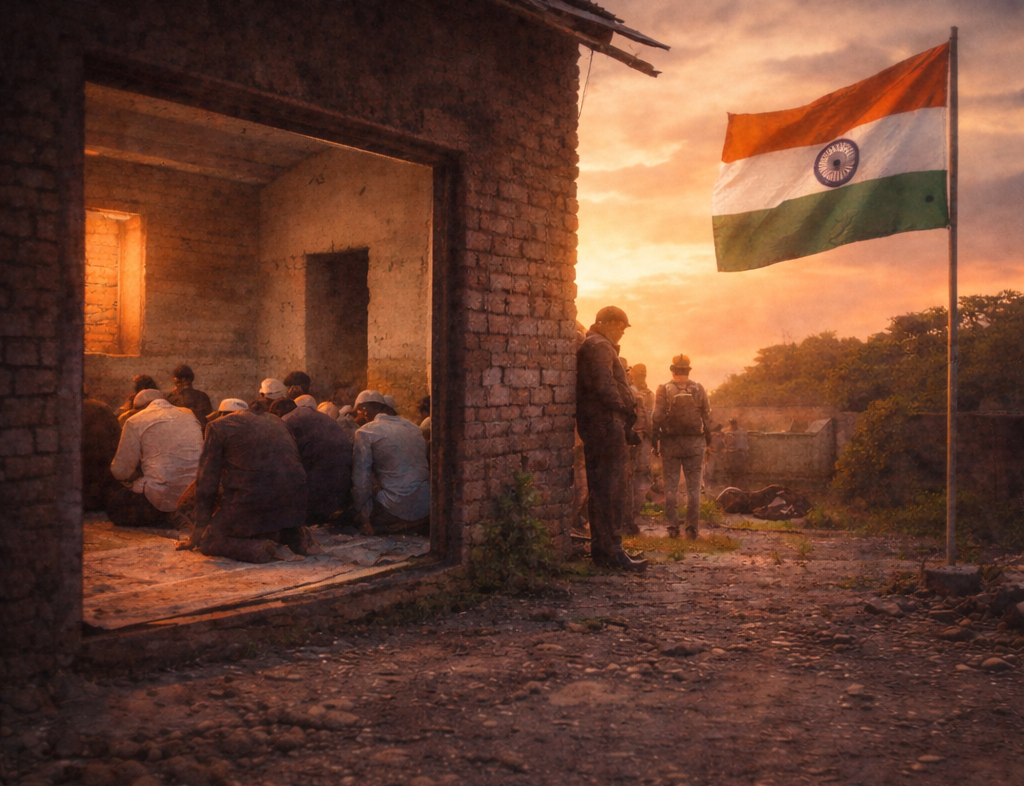
BAREILLY, Uttar Pradesh — Police in Mohammadganj village, in the Bareilly district of India’s Uttar Pradesh state, detained 12 people on January 18, 2026 after they were found offering congregational namaz inside a vacant house that local authorities said had been converted into a “makeshift mosque” without official permission. The action has raised questions about how religious practices are regulated in private spaces and the balance between public order and faith-based activities.
According to the Uttar Pradesh Police, the house — usually unoccupied — was allegedly being used regularly for Jumah prayers and as an improvised madrassa, prompting concerns from some villagers that the activity could disturb peace and order. After videos showing the prayer gathering circulated on social media, local residents reported the situation to authorities, who responded by detaining the participants and deploying additional police personnel to monitor the situation.
Authorities said those detained were held on preventive grounds related to public peace and failure to present any document showing permission to hold religious gatherings in the private property. Police emphasized that while freedom of religion is protected by law, organising large congregational activities without clear administrative approval can raise law-and-order challenges in mixed communities.
Local Views and Community Impact
Some neighbours in Mohammadganj defended the prayer gathering, saying the village lacked an easily accessible mosque and that elderly residents found it difficult to travel long distances, especially in severe weather, to attend Jumah at distant mosques. Others viewed the use of the house for regular clustered prayer without formal permission as insensitive to regulatory norms and potentially provocative.
The episode has reignited community conversations about how religious observances fit within legal frameworks governing private property use. India’s constitution guarantees freedom of religion, including the right to worship alone or in congregation, subject to law, public order and morality. Critics of the police action argue that peaceful prayer — especially inside private property — should not be equated with public disturbance when there is no evidence of disruption or inflammatory conduct. Observers also warn against the potential for law-and-order procedures to be applied in ways that may unintentionally discourage legitimate religious practice.
Context Within Larger Trends
This incident is one among several contested events in parts of Uttar Pradesh where prayer gatherings outside formal mosque spaces have drawn official scrutiny. Last year, a similar situation in the same district saw a small group detained after prayers in a makeshift structure on private land — a reminder that disputes over authorisation and communal space occasionally surface in the region.
For many Muslims — for whom congregational prayer and community worship are central to religious life — access to appropriate spaces such as recognised mosques or community centres is not just a matter of convenience but of spiritual dignity. India has a rich history of historic mosques and Islamic learning centres — including the 18th-century Noumahla Masjid in Bareilly district — which have served as anchors of worship and social cohesion for centuries.
Faith, Law and Social Harmony
In The Quran, the sacred text of Islam, believers are reminded that “Prayer restrains [one] from shameful and unjust deeds” — a moral principle that underscores the role of worship in nurturing both personal discipline and social harmony. For those seeking to deepen their understanding of how Islamic teachings relate to community life and social order, The Clear Quran offers accessible insight into the ethical dimensions of faith practices.
Islamic tradition also emphasises the importance of seeking knowledge and respecting lawful authority. In the context of social conduct, respected Hadith Books recount the Prophet Muhammad’s guidance on maintaining respect for public norms while observing religious duties.
Moreover, lessons from The Seerah — the biography of the Prophet Muhammad ﷺ — illustrate how early Muslim communities navigated worship, communal gatherings, and social regulations in ways that balanced spiritual obligations with respect for the surrounding society’s stability.
Understanding these sources can help communities approach situations like the Bareilly incident with both devotion and a commitment to peaceful coexistence.


Leave a Reply