
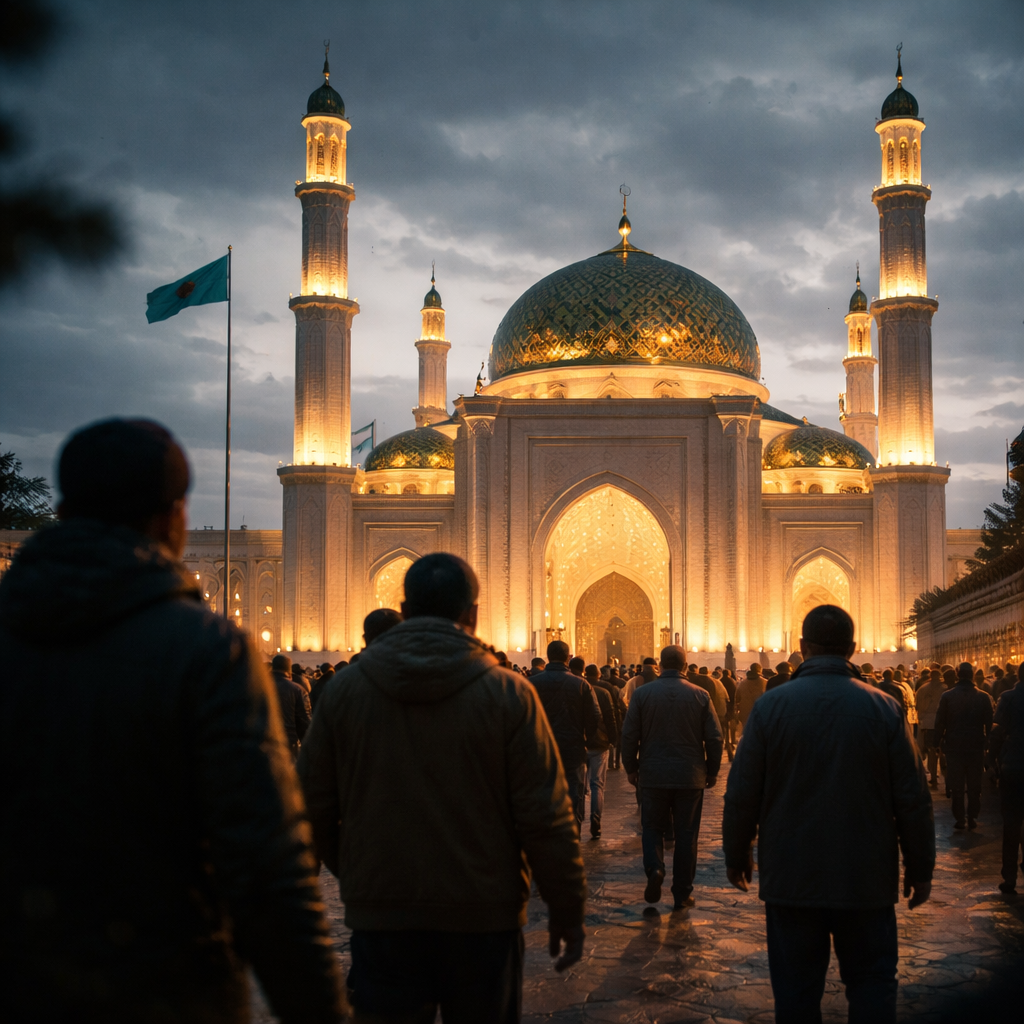
KAZAKHSTAN — Kazakhstan commissioned 20 mosques in 2025, a 54% increase from the previous year, according to figures cited by Kazinform from the country’s Bureau of National Statistics and later referenced by several local outlets. (Source – Kazinform, January 27, 2026)
The 2025 figure is among the highest annual totals reported in roughly a decade, with Kazinform noting that a larger number was last recorded in 2015, when 24 mosques were put into operation. (Source – Kazinform, January 27, 2026)
While the construction numbers indicate rising religious infrastructure, analysts and journalists caution the headline total does not explain key differences between projects—such as capacity, community usage, or local financing—because capacity figures are not consistently published alongside the annual commissioning data. (Source – Kazinform, January 27, 2026)
Regional growth and funding patterns
Reporting that breaks down the 2025 construction by region suggests the increase was driven heavily by areas outside the capital, with Finratings.kz identifying Kyzylorda Region as the leading area by count and describing a broader shift toward smaller, locally funded projects rather than one dominant “megaproject” in a single city. (Source – Finratings.kz, January 27, 2026)
Finratings.kz also reported that total recorded spending on newly commissioned mosques rose in 2025 compared with the year before, while remaining well below years dominated by exceptionally large builds—highlighting how national totals can be shaped by a single flagship project versus many mid-sized community mosques. (Source – Finratings.kz, January 27, 2026)
The construction surge comes against a backdrop of a large, nationwide network of religious buildings and entities: Kazakhstan’s government has published figures indicating thousands of registered religious organizations and buildings, including thousands of mosques, reflecting both demographic realities and ongoing state administration of religious life in a formally secular system. (Source – Government of Kazakhstan, January 14, 2026)
Regulation, community life, and the debate over religious space
For many Muslims, new mosques are not only symbolic but practical—especially in fast-growing towns or rural districts where travel to Friday prayer can be difficult and where communities may seek additional prayer space for Ramadan and Eid periods. (Source – Finratings.kz, January 27, 2026)
At the same time, Kazakhstan’s legal and policy environment shapes how religious buildings operate, including registration requirements and official oversight of religious activity—issues that have been debated publicly amid periodic discussions about tightening or revising religion-related legislation. (Source – CABAR.asia, January 9, 2025)
International rights monitors have also raised concerns that broader controls on religious activity can affect Muslims who practice outside state-preferred structures or interpretations, even as mosque construction and formal religious infrastructure continue to expand. (Source – U.S. Commission on International Religious Freedom, April 2025)
Islamic and Ethical Context
For Muslim communities, mosques are more than construction statistics: they are places of prayer, learning, reconciliation, and social support, where worship is tied to responsibility and service. The Quran frames faith in ways that connect devotion with justice and care for the vulnerable, a reminder that building spaces for worship should also strengthen ethics, trust, and community cohesion.
The early Islamic community offers a practical model of what that can look like. In The Seerah, the Prophet Muhammad (Peace be upon Him) is portrayed establishing the mosque as a community anchor—welcoming, orderly, and tied to public benefit rather than vanity. Hadith Books similarly emphasize sincerity of intention and honesty in collective affairs, which can guide conversations today about transparent funding, fair governance, and ensuring new mosques meet real community needs across Kazakhstan’s regions.

Leave a Reply